
Parcels | Geodata
Official parcels
The official parcels represent the geometry of over 65 million parcel outlines in polygon form. Like the official house coordinates and house perimeters, they are derived from the data of the official real estate cadastre.
They provide valuable information for store planning, location evaluation (e.g. for WiFi hotspots or navigation applications), the calculation of floor plans or sealed areas and many other aspects of geomarketing applications. They can also be used to visually enhance street maps on websites or in mobile apps
The information is available in combination with data from the extensive micro-geographical Nexiga Building database.
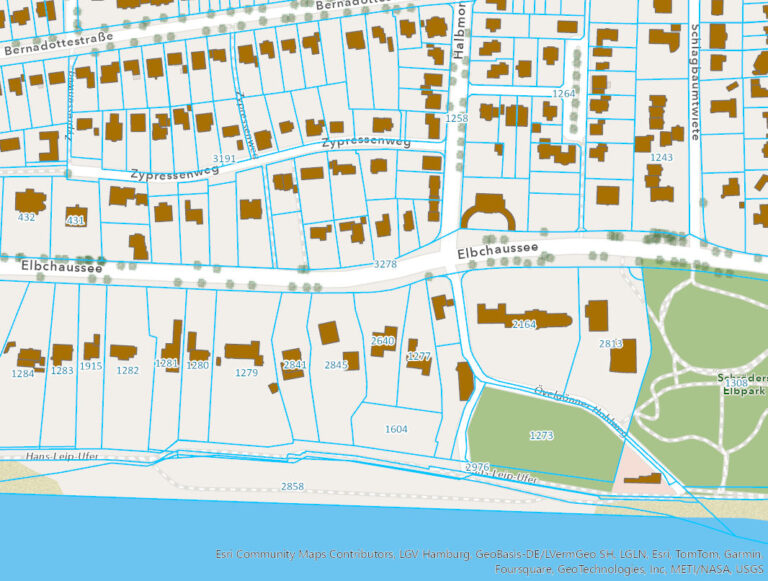
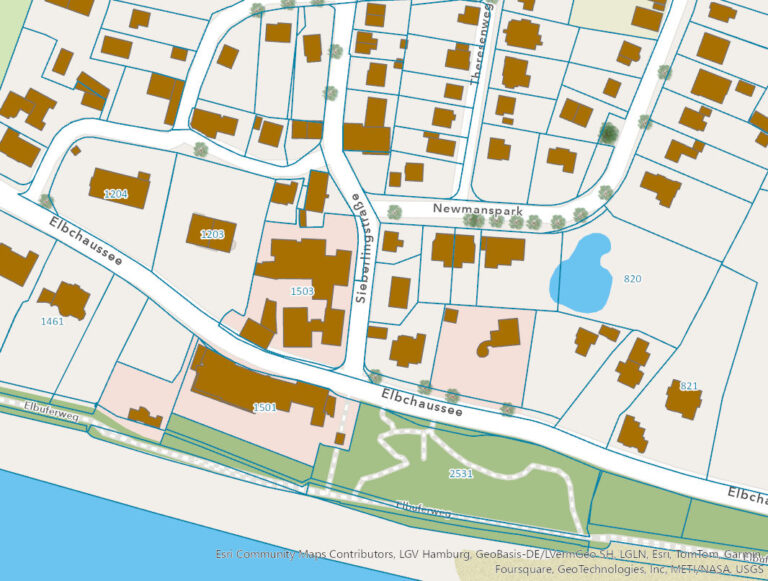
Additional information available:
-
Parcel number
-
District key
-
Parcel number
-
Administrative affiliation through the official County-Municipality key (KGS)
-
Textual description of the site designation (partly with exact address)
-
Land use (e.g. private/public use, agriculture, settlement, traffic, etc.)
Die Informationen sind in Kombination mit den Daten aus der umfangreichen mikro-geografischen Nexiga Datenbank erhältlich.
Wofür Flurstücks-Daten genutzt werden?
Wo lassen sich Glasfasertrassen wirtschaftlich und effizient planen?
Flurstücksgrenzen und Informationen zur Flächennutzung helfen, mögliche Leitungsverläufe zu bewerten, öffentliche und private Flächen zu unterscheiden und Genehmigungsprozesse vorzubereiten.
Wie lassen sich Grundstücke und Immobilienstandorte genauer bewerten?
Flurstücksgeometrien zeigen die räumliche Lage und Ausdehnung einzelner Grundstücke. In Kombination mit Gebäude- und Marktdaten ermöglichen sie detaillierte Standort- und Umfeldanalysen.
Welche Grundstücke eignen sich für neue Infrastrukturstandorte?
Anhand von Flurstücksgrößen, Grundstücksgrenzen und Nutzungsarten lassen sich potenzielle Standorte für Energieanlagen, Mobilfunkmasten oder andere technische Infrastruktur identifizieren.
Wo bestehen Potenziale für neue Bau- und Entwicklungsprojekte?
Flurstücksdaten unterstützen die Identifikation und räumliche Vorauswahl geeigneter Flächen. Durch die Verknüpfung mit Informationen zur Flächennutzung und Bebauung lassen sich mögliche Entwicklungspotenziale gezielter untersuchen.